Designing Infrastructure People Want to Live With
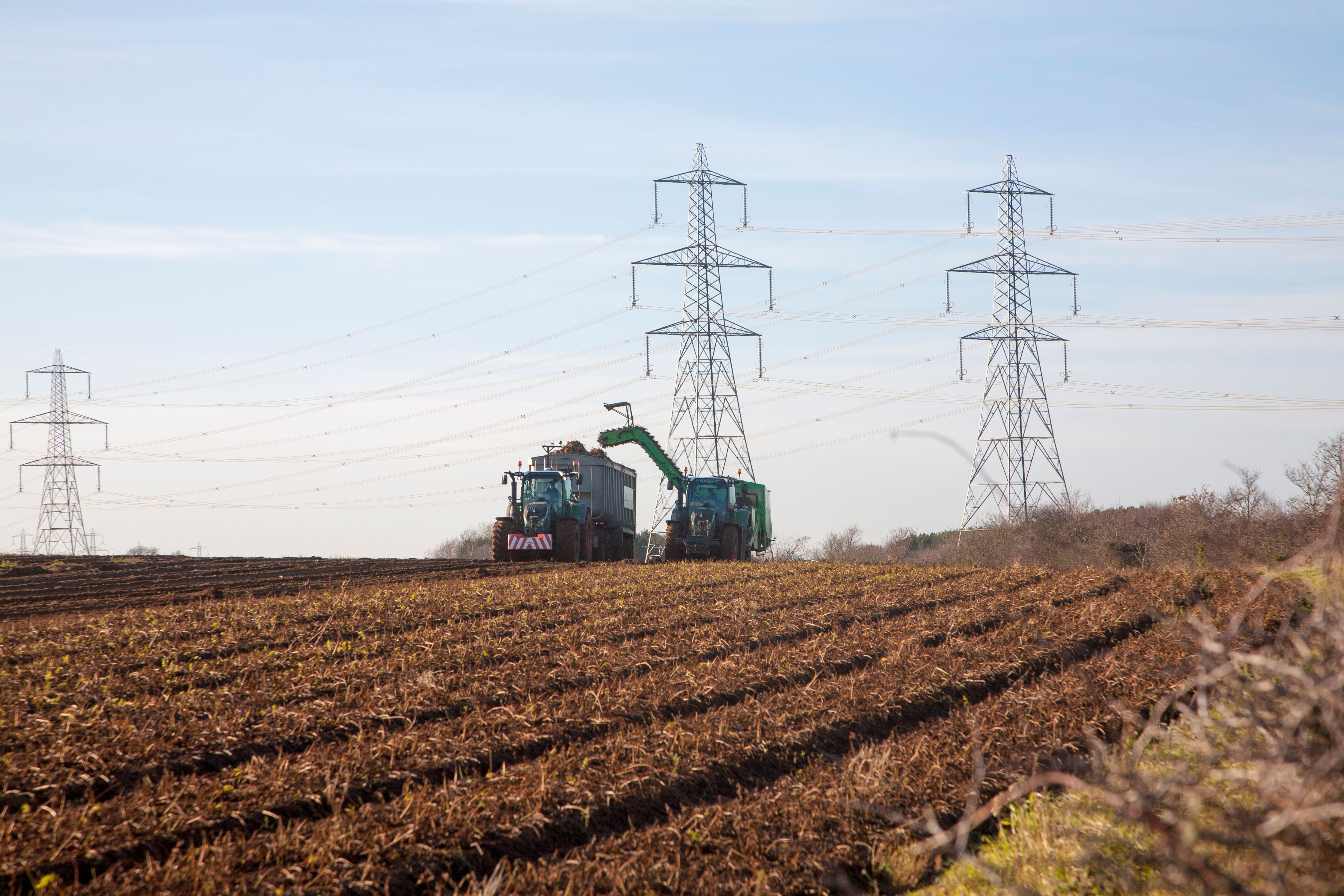
But the success of that transformation hinges on a critical factor that is often overlooked - community acceptance.
For too long, public engagement around energy infrastructure has been treated as a compliance exercise. Today, it’s a strategic advantage. Communities aren’t just ‘stakeholders’, they are residents, neighbours, landowners, and local voices whose daily lives are shaped by the assets we design and deliver.
To build infrastructure that communities genuinely want to live with, the industry must evolve how it designs,communicates, and collaborates.
INVOLVEMENT ISN'T AN OBSTACLE, IT'S A DESIGN REQUIREMENT
In my experience, communities challenge projects, not because they oppose progress, but because infrastructure can feel imposed, disruptive, or unclear in purpose. Concerns typically centre on
- Visual impact and landscape change
- Construction disruption
- Environmental and ecological effects
- Transparency and fairness in decision making
- Lack of early involvement
These concerns apply equally to overhead lines, underground cables, substation builds, solar farms and wind farms.Ignoring them often leads to delays, redesigns, public opposition, legal challenges, and spiralling costs. Addressing them early is not only respectful,it’s commercially smart.
START WITH PEOPLE, LONG BEFORE THE DESIGN BEGINS
The most effective infrastructure projects are shaped with communities, not simply shown to them.
Early, intentional engagement
Bring communities into the journey before route or site options are fixed.
Ask:
What matters to you about the landscape?
What are your fears?
For substation projects, this often includes:
- Preferred screening approaches
- Acoustic concerns
- Floodlighting design
- Traffic flow and construction access
In our experience, when residents help shape constraints, options, and priorities, opposition gives way to partnership.
Transparency
Communities are far more accepting when they understand
- Why infrastructure is needed
- Why specific locations were shortlisted
- How overhead, underground and substation options differ
- How construction and operational impacts will be managed
Simple, jargon free explanations build trust faster than glossy brochures ever will.
DESIGNING BETTER OUTCOMES
In our experience, proactively taking a community-centred design ethos can dramatically change project perception.
Visual and environmental sensitivity
This may include:
- Aligning OHL and UGC routes to protect views, heritage, or habitats
- Locating substations to minimise visibility and noise impact
- Undergrounding selectively where it adds meaningful community value
- Designing reinstatement, acoustic bunds, planting schemes and biodiversity enhancements with residents
- Minimising disruption through smart construction planning
Digital tools can help demystify an approach
3D visualisations, immersive route flythroughs, substation massing models, andAR overlays help communities see the future, not imagine it.
We have found this a useful way to reduce community uncertainty, which in turn reduces resistance.
A NEW KIND OF SOCIAL LICENCE
Building infrastructure people want to live with requires four commitments:
1. Empathy
Understand the emotional, cultural, and practical significance of place, notjust it’s technical constraints
2. Honesty
Be open about what can be changed, what can’t and (most importantly) why.
3. Inclusion
Give communities meaningful influence over decisions, not token consultation once the designs are fixed
4. Legacy
The objective should be to leave every place better than you found it –environmentally, socially and economically.
This isn’t idealism, it’s engineering maturity – and commercially sensible. Social licence is no longer won through persuasion; it’s earned through participation.
THE FUTURE: TECHNICAL EXCELLENCE MEETS HUMAN EXPERIENCE
The coming decade will bring unprecedented investment in network reinforcement and expansion, spanning overhead lines,underground cables, and an increasing number of new and upgraded substations.
I believe that the engineering organisations who thrive won’t just be those that simply deliver technically brilliant designs, they’ll be the ones that deliver human-centred infrastructure.
- Infrastructure that fits landscapes
- Infrastructure that minimises disruption
- Infrastructure that communities help shape and feel proud to live alongside
Because in the end, the question is notjust “Can we build it?”
It’s “Will people embrace it?”
GROUNDLINE ENGINEERING
Groundline is a global consultancy specializing in transmission and distribution lines engineering services for network operators and service providers.
We bring creative thinking to projects, ensuring solutions are cost-effective, resilient, safe and good for the planet.
With offices in the USA, the United Kingdom, Australia and New Zealand, we have experience in all aspects of the power lines industry - from 11kV to 500kV+, new builds to refurbishments, condition assessments to asset management, site support and design verifications, to project management. Our team have worked around the world, from remote, dry deserts, to wild, wet rainforests, urban cities, to cyclone-prone prairies.
Whatever challenges you face, we understand your requirements.
Get in touch to discuss how we can ensure your power network is fit for the future.
Contact us here
Other News & Updates
Welcome Mathilde Tongue to Groundline
Welcome to Groundline, Mathilde. We’re very pleased to have you on the team.
Let’s Build Smarter, Safer, Stronger
Whether it’s a new project, technical support, or simply a conversation about possibilities — we’re here to help.